
Togus Live Stake Workshop
Thank you to everyone who attended our Live Stake workshop at Togus Pond.
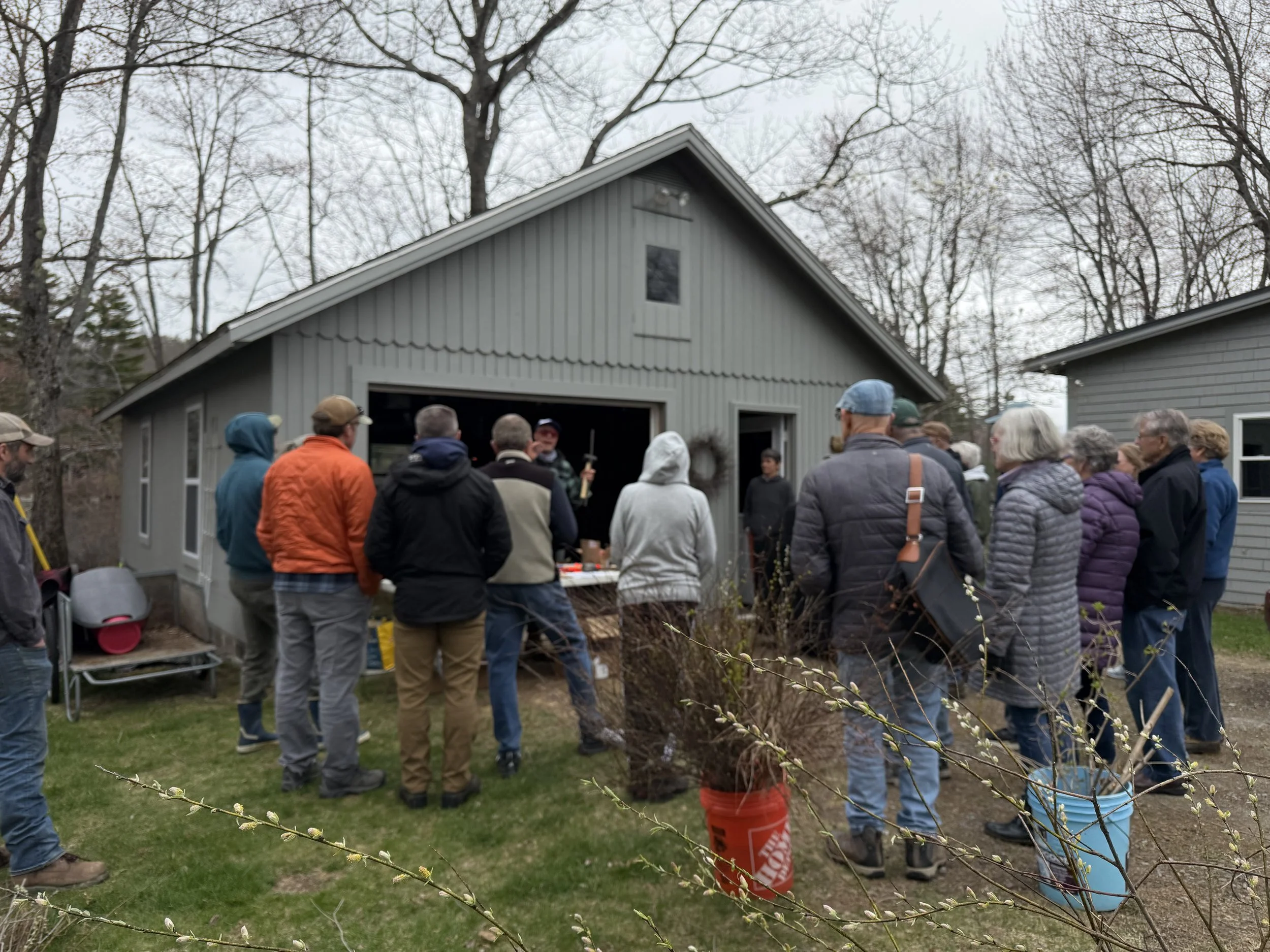
Introduction to the live staking workshop
Some good reminders from our workshop. Please review the “Live Staking Handout” provided at the workshop or linked below. It includes valuable information such as optimal timing for harvesting and planting, as well as a list of appropriate species for live staking.
I have also compiled a short list of additional information mentioned during the workshop:
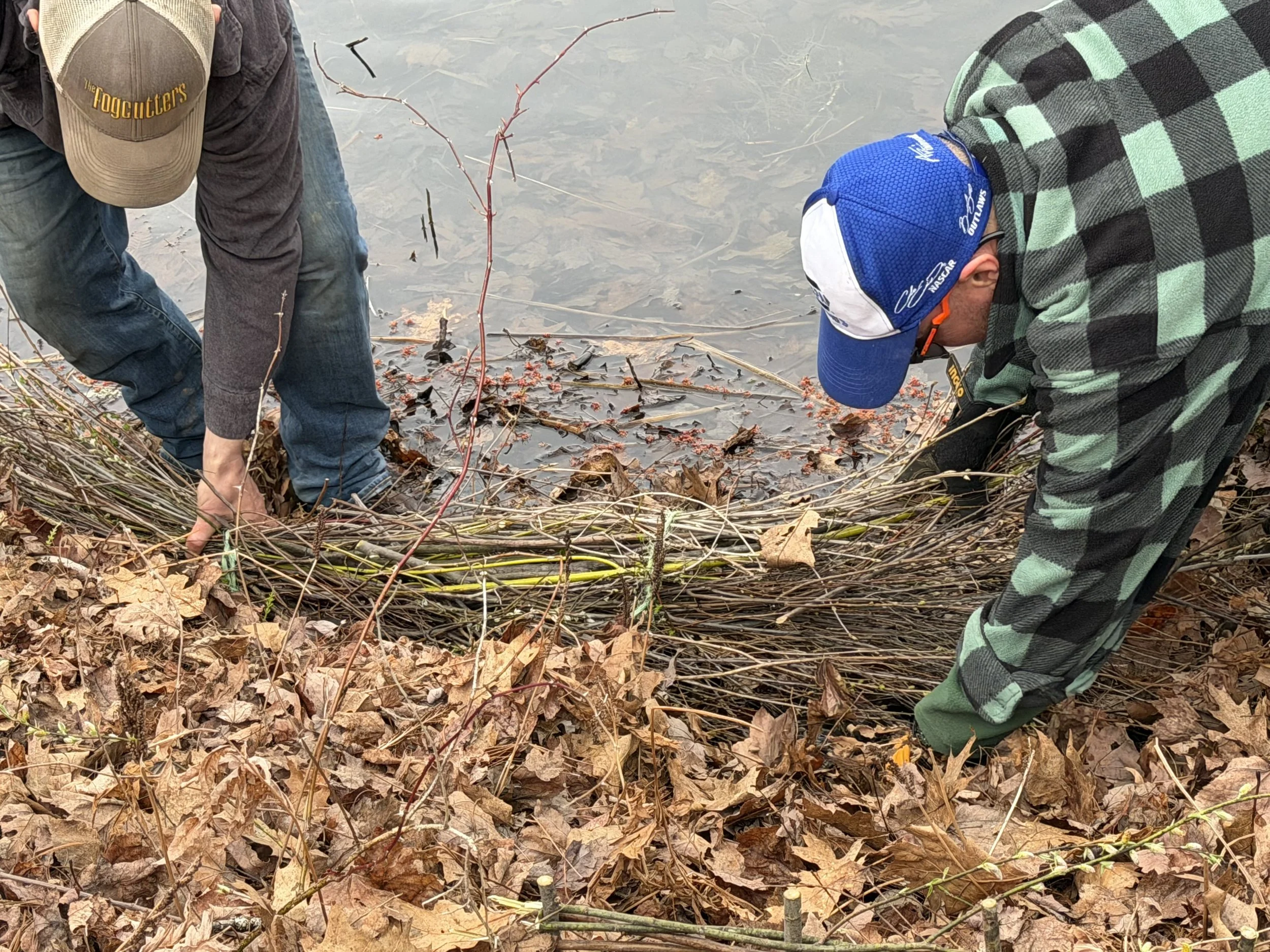
John and Jordan installing a live fascine
Tag materials when they are leafed out and easier to identify so you know where to collect source material during appropriate live staking seasons. Make sure you get permission if the material is not on your own land.
A live fascine (see photo) is a potential way to handle erosion along a calm waterfront that helps hold soil in place until plants can become established. Bundles of live stakes and cuttings are tied together and typically installed in a shallow trench along the contour, then staked in place and partially buried to ensure good soil contact and promote rooting over time.
Live stakes and bare root native plants can often be installed by hand, with bare root native plants often installed using slit planting, without a permit when completed with minimal soil disturbance consistent with Maine DEP de minimis guidance. More information can be found in the Hand Planting Memorandum.
Make sure live stakes are installed deep enough so that the majority of the stake is below ground and in contact with moist soil. If rock is encountered, stakes can be angled to achieve adequate depth and soil contact. An accurate depiction of proper installation is shown in the “Live stake installation” photo below.
A wattle (see photo below) is another option, similar to a fascine, where vertical stakes are installed and live branches are woven between them to create a makeshift fence that helps curb erosion while the plants take root.
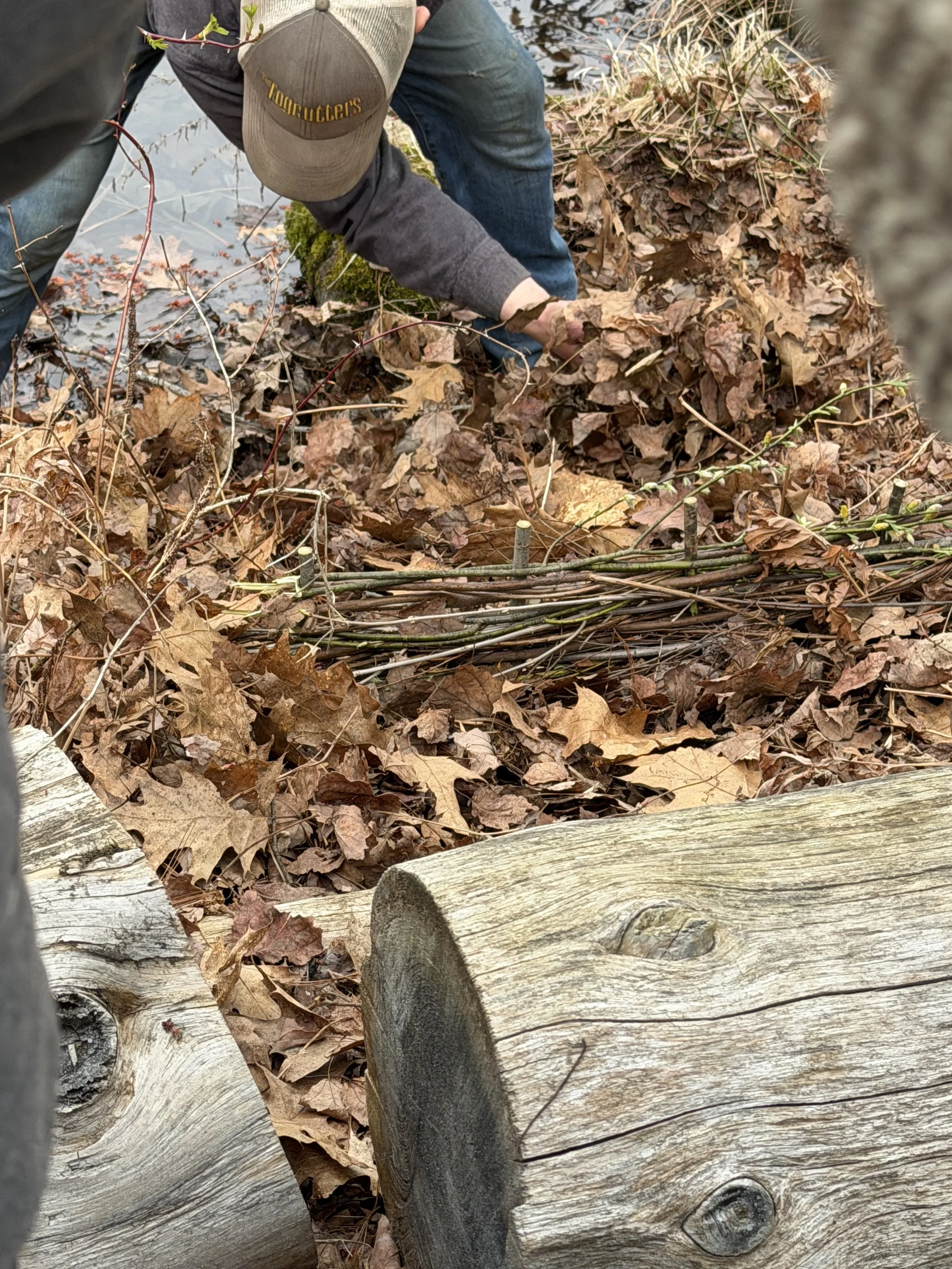
A wattle used to prevent erosion while the plants become established.
Some final tips include making sure openings are not so large that the stakes are loose or poorly supported. They need good soil contact to root successfully. Also, make sure they are well watered for at least a few weeks if they are not at the water’s edge. An erosion control mix and mulching around live stakes can help retain moisture in the surrounding soil.
Below are resources for those who attended the event, as well as anyone interested in learning more:
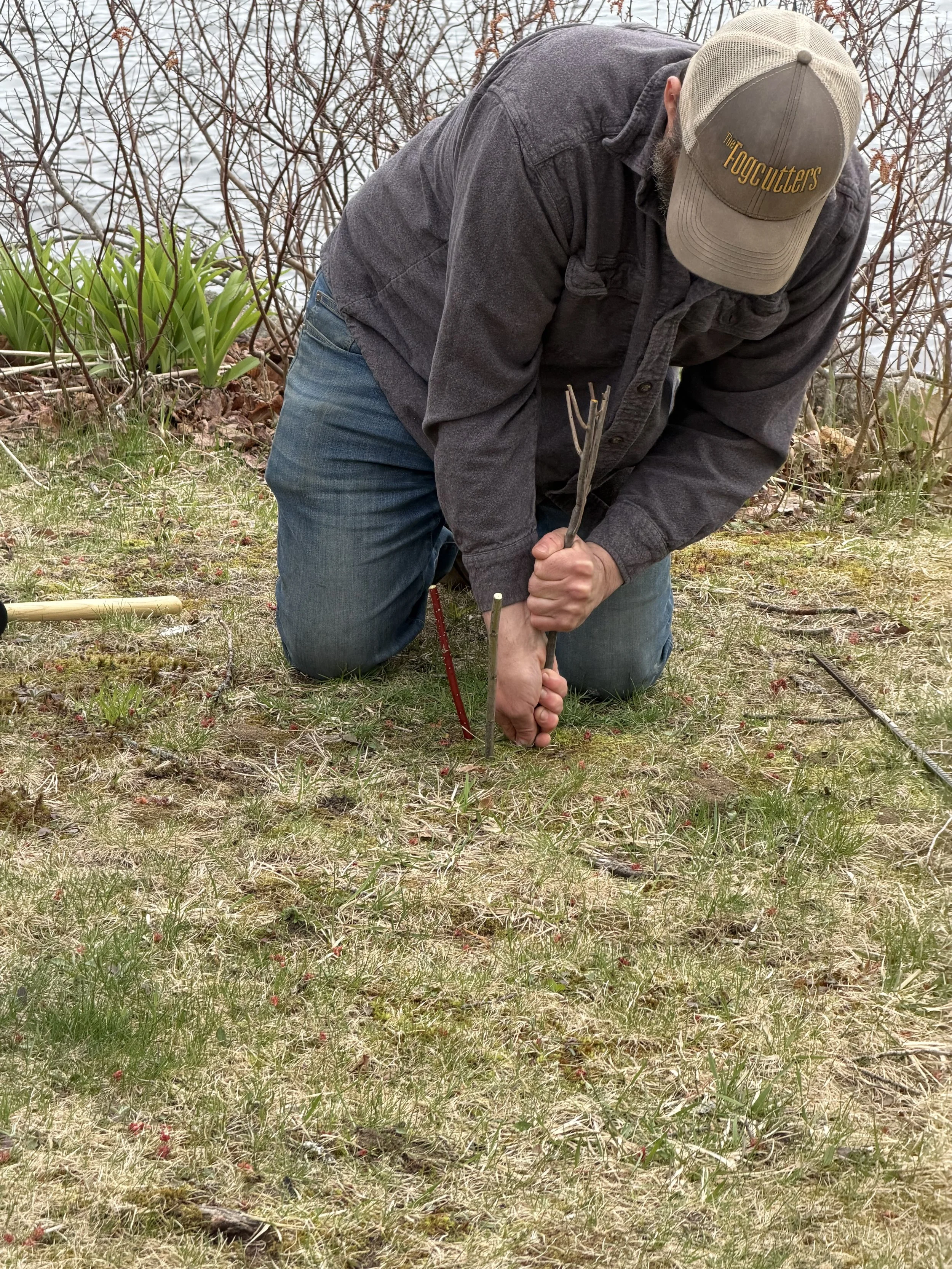
Live stake installation
For anyone who was unable to attend, additional live staking workshops are available for those who are interested. See the flyer below for more information, or click here to register for an event.
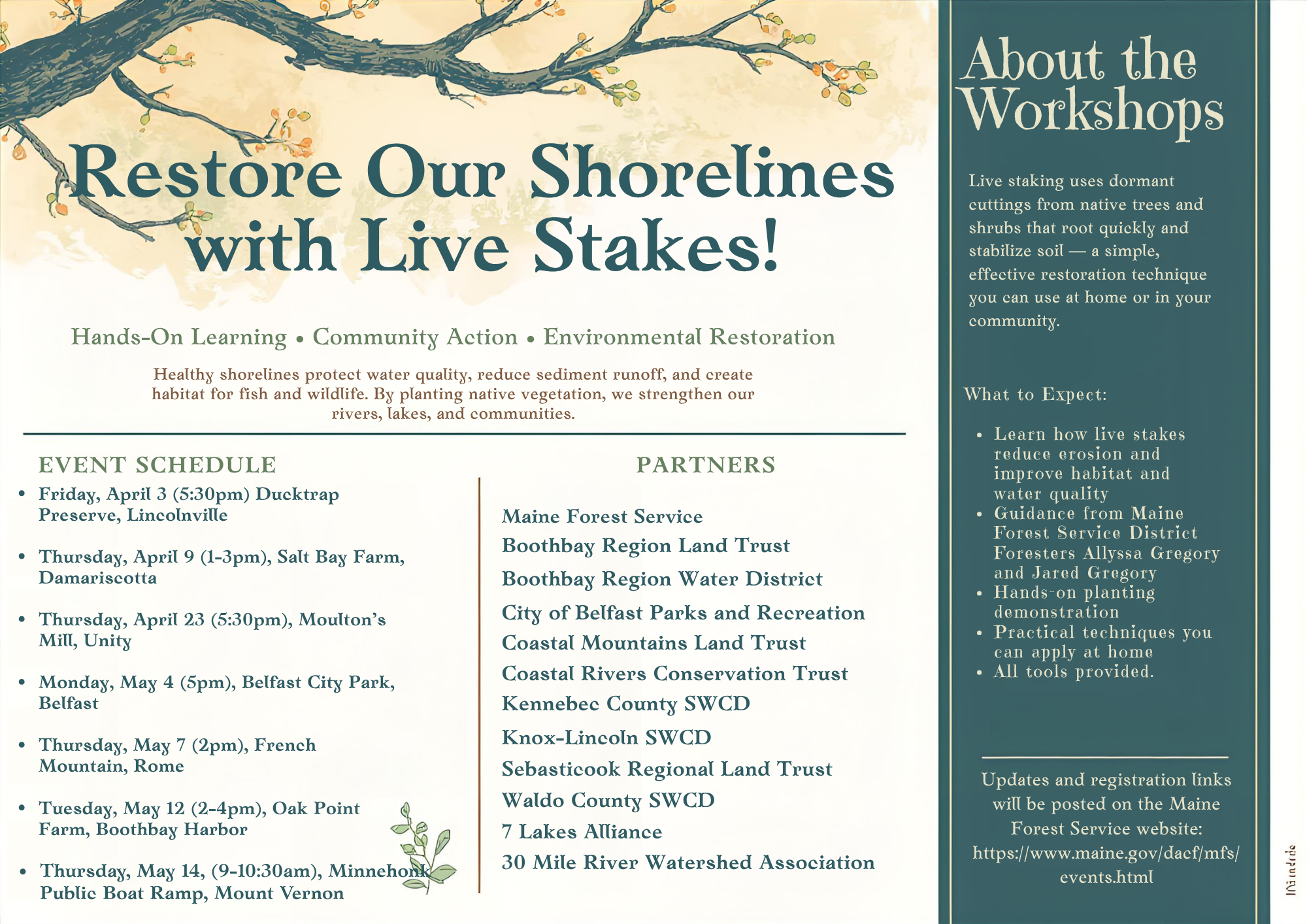
Flyer for live stake events in Kennebec County (Rome and Mt Vernon) and neighboring counties.