
Invasive Plant Workshop
Thank you to all who attended our invasive plant workshop at Viles Arboretum. The workshop was presented by Chad Hammer, Maine’s State Invasive Biologist, along with Eva, who has been working with him this year. Jared Gregory, the District Forester for parts of Kennebec and Lincoln, also provided additional information about some of the woody species we encountered in the field.
For some useful resources on identifying and managing invasive plants, see below:
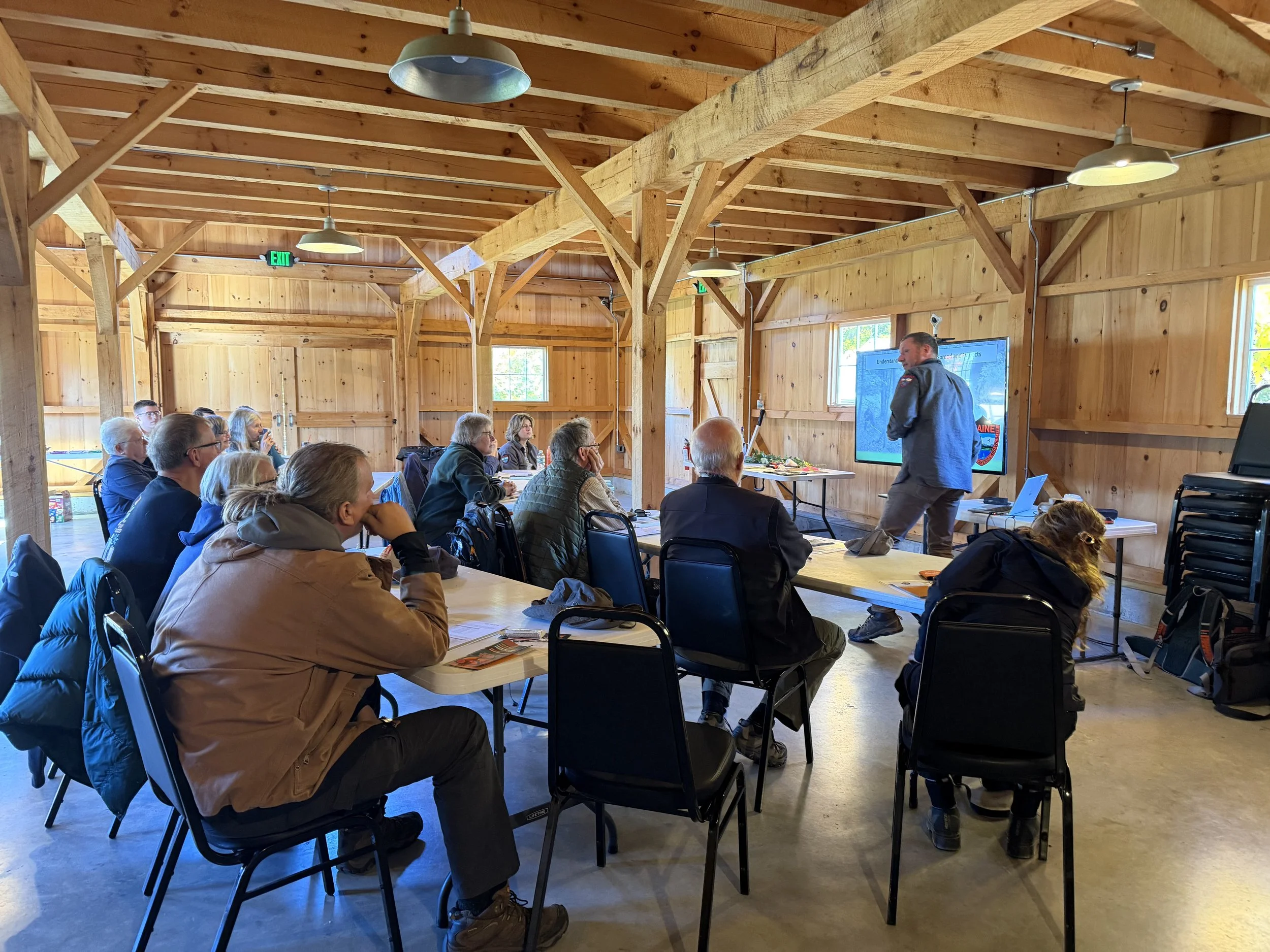
Chad presenting during the first portion of the day.
The workshop began with important information to give us a foundation for the day, including how invasive plants spread, why early detection is important, how invasives can negatively affect our native ecology, and the role of allelopathy and mycorrhizal connections.
During this section, we learned to look out for materials that could be brought onto your property, including plant material and fill. Potted plants and fill can potentially contain invasive species, so it is important to keep an eye on these materials and seek clean fill whenever possible.
Attendees were also introduced to iMapInvasives, which allows users to report invasive plants they find and document when they are working on an area. The platform also has a useful feature for land trusts and other organizations to create projects that multiple people can use to coordinate invasive plant management on their property.
See the iMapInvasives Flyer for more information.
The following species are worth watching for in Maine because early detection can help prevent their spread.
Japanese Stiltgrass (Microstegium vimineum)
Mile-a-Minute Vine (Persicaria perfoliata)
Tree of Heaven (Ailanthus altissima)
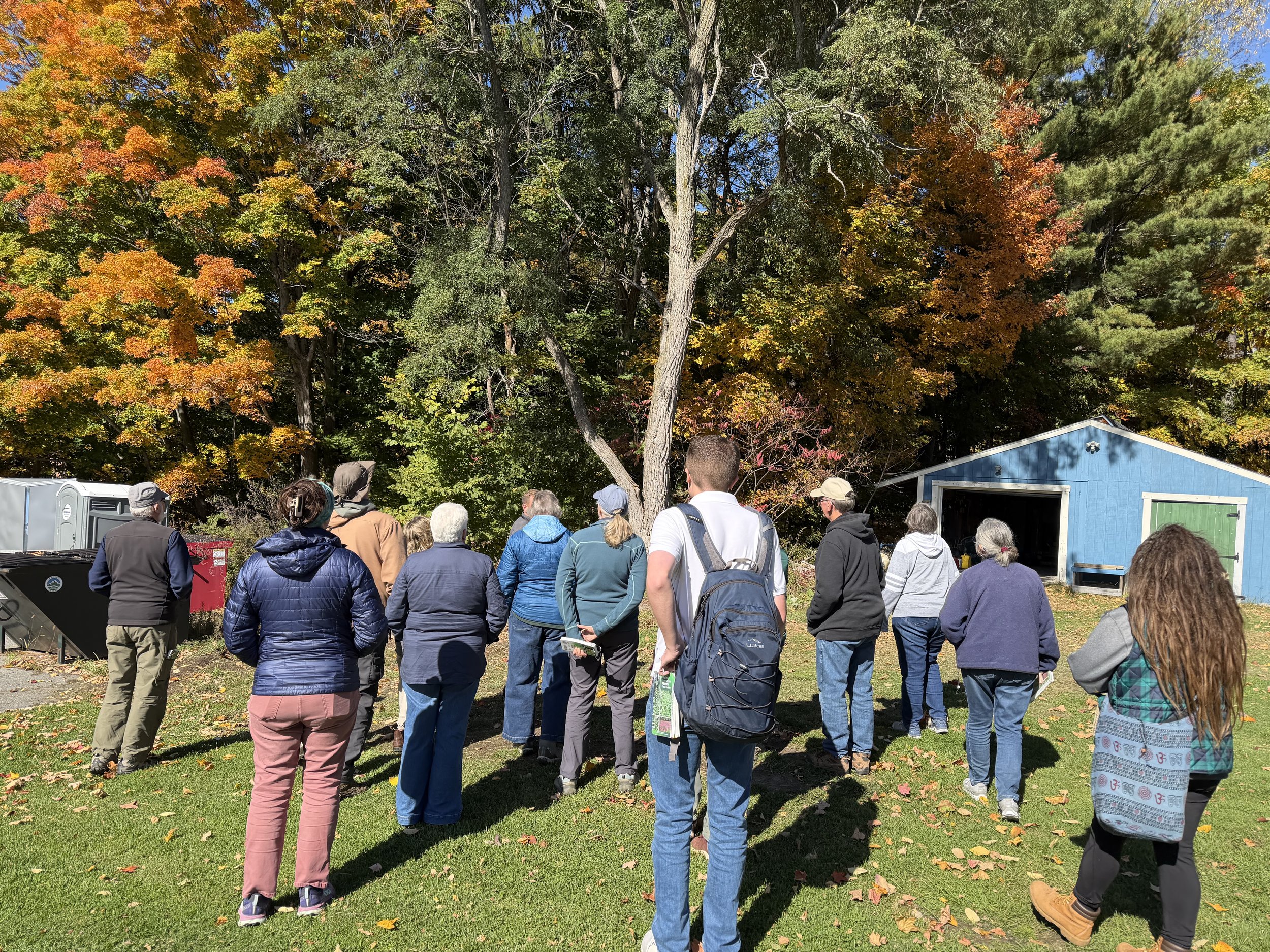
Attendees learning about various invasives during the outdoor portion of the event.
Following the indoor portion of the workshop, we headed outside to look at invasive plants in the field. Being able to identify a plant is an important first step, but knowing how that plant grows and spreads is also important when deciding how to manage it.
Different invasive plants respond differently to being cut or removed. For example, some species spread through rhizomes, which are underground stems that can produce new growth. Simply cutting the visible portion of a rhizomatous plant does not necessarily stop it from growing, so management may require repeated treatment or a different approach. Treatment methods may also change over time, with landowners starting with one or more methods and adjusting their approach as needed throughout the treatment process.
Autumn olive provides another example of why cutting alone is not enough to control an invasive plant. Even when cut at the base, it can regrow, meaning additional treatment is needed to manage it.
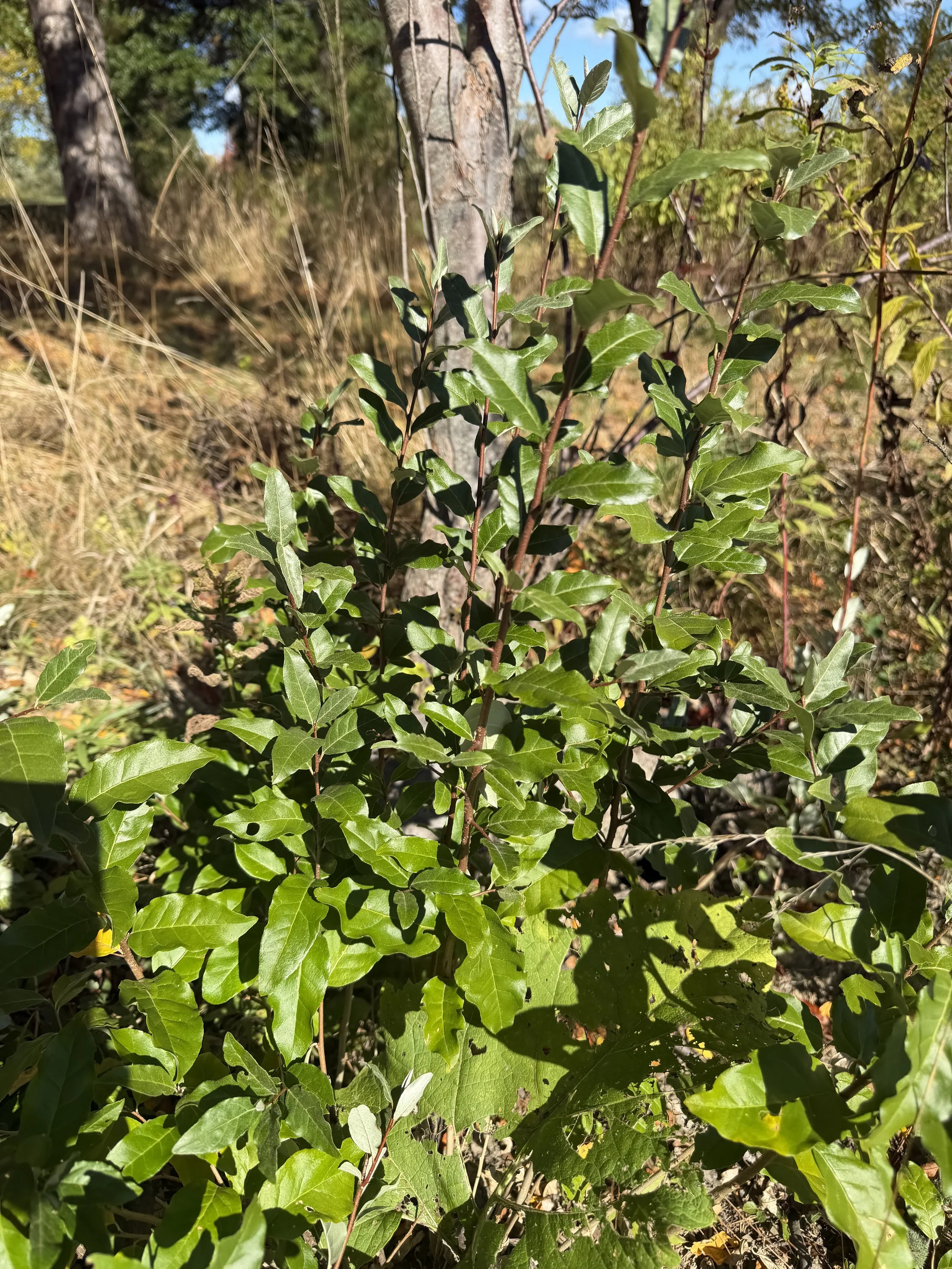
Autumn olive regrowth after cutting at the base.
As we walked through the arboretum, we were able to put some of the information from the morning session into practice by identifying invasive plants and discussing how they spread and what can be done to manage them. We encountered Asiatic bittersweet in both an open field and growing up into trees, providing examples of how management approaches can vary depending on the situation. In fields, mowing everything down to control an invasive plant can also remove beneficial vegetation, leaving room for the invasive species to spread further.
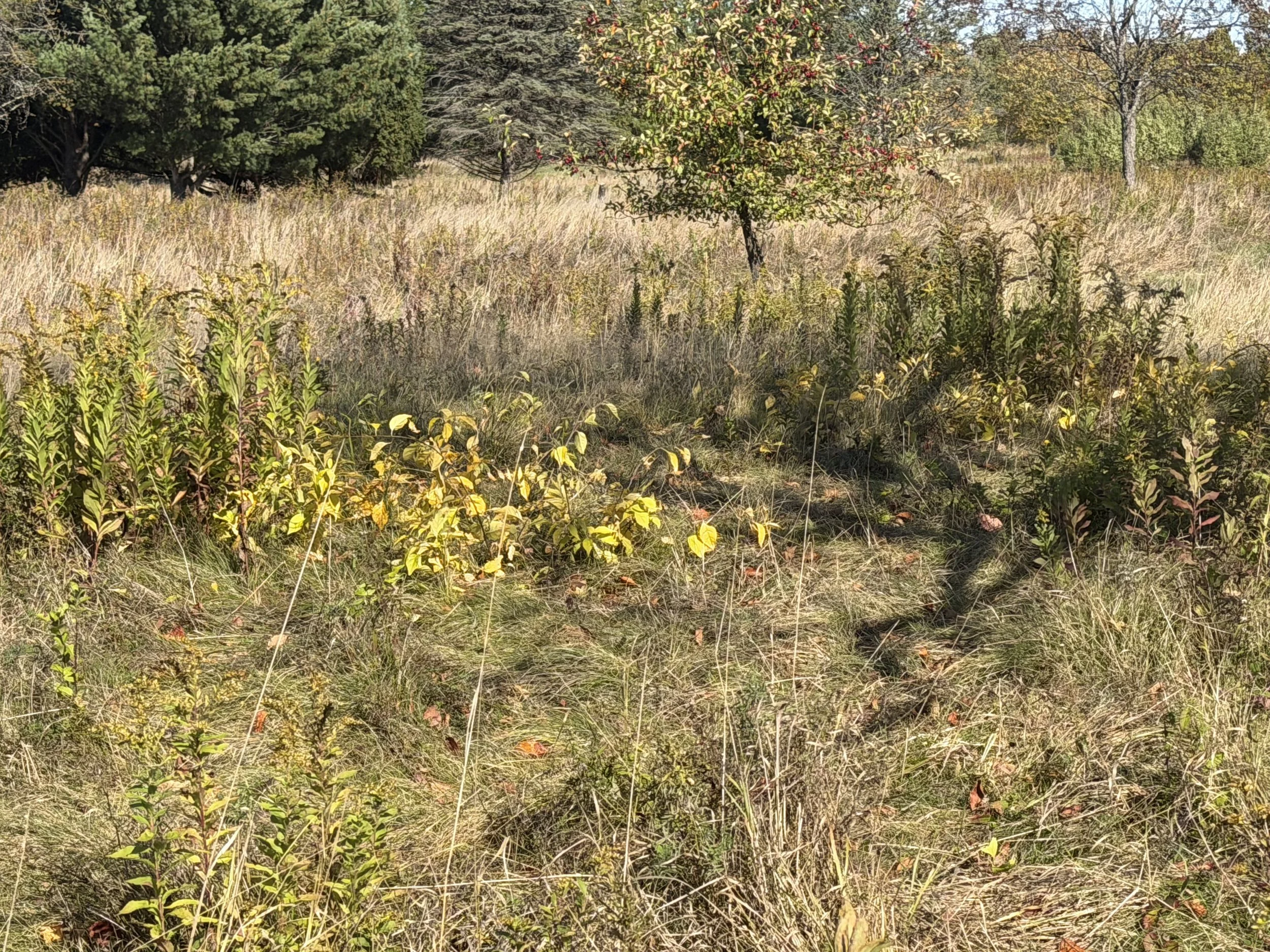
Asiatic bittersweet growing among other vegetation in an open field.
When Asiatic bittersweet has climbed into a tree, cutting the vine near the base and again around chest level separates the upper portion from the roots and leaves a gap to help prevent new growth from immediately climbing back into the tree. Because bittersweet can regrow from its roots, cutting alone does not eliminate the plant. The cut vines should be left in place to die and decompose naturally rather than pulled out of the tree, which could damage the tree or cause injury. More examples of the invasive plants we identified and their treatment options can be found near the end of this blog.
We also learned about resources available to landowners. Jared discussed the WoodsWISE program, which offers cost-share assistance for forest management planning. Landowners with 10 to 1,000 wooded acres may be eligible for assistance with a forest stewardship plan. More information is available on this information sheet.
The Woods Wise Resilience Program offers cost-share assistance for a variety of forestry practices, including invasive plant control and tree planting. Landowners with at least 10 forested acres may be eligible. The program is expected to run through December 2029. Reimbursement rates and eligible practices vary, and landowners can find more information on the program website.
This information sheet on invasive plants provides a lot of the information presented during the workshop. Many of the species listed in the “What Invasive Plant Species are Causing Problems in Maine Forests?” section were found during our hands-on site walk during the second part of the day.
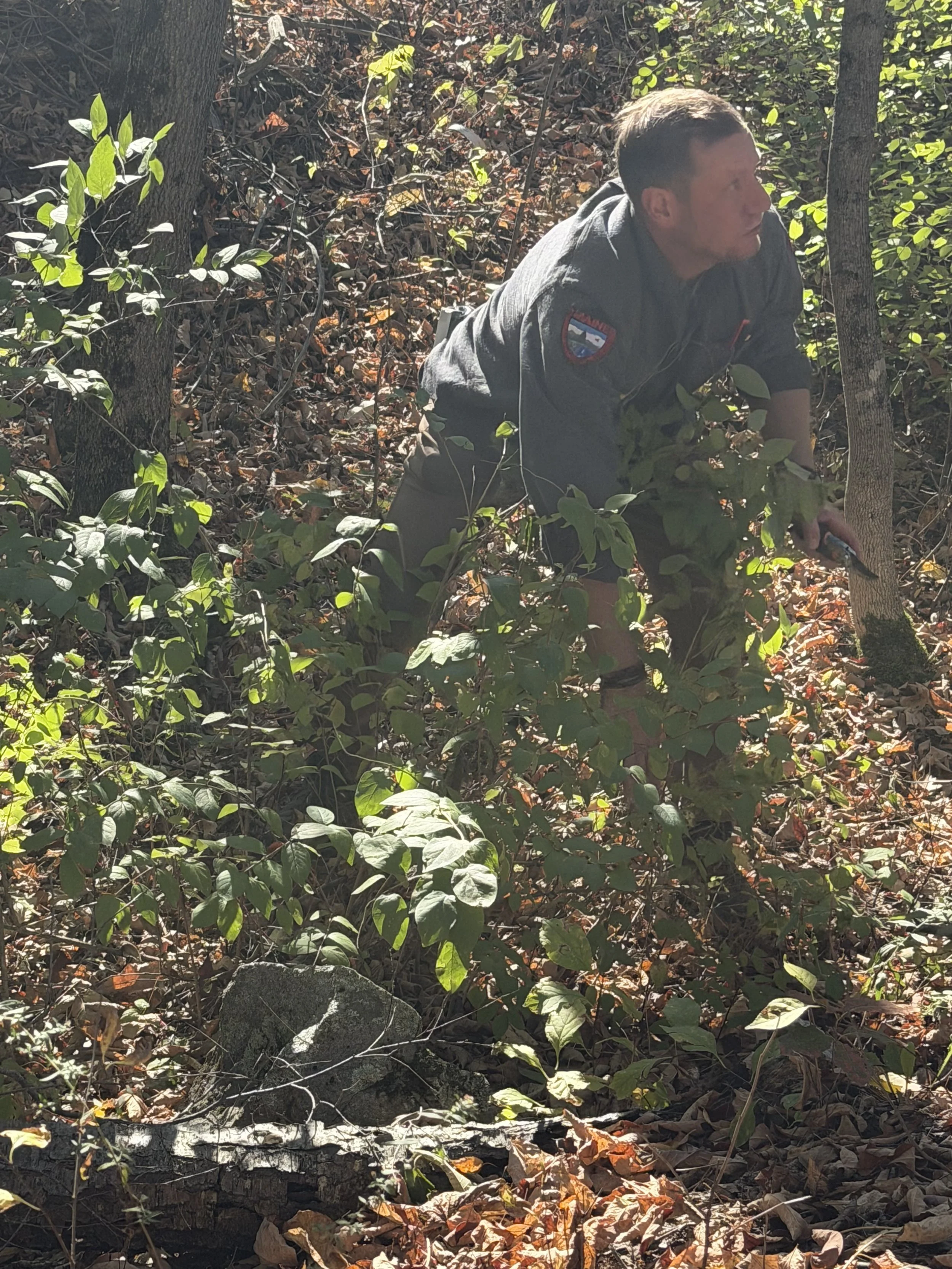
Chad discussing invasive honeysuckle.
Here are some of the species we found on our walk. Click on a species name for more information.
Shrub honeysuckles (Lonicera spp.)
Asiatic bittersweet (Celastrus orbiculatus)
Glossy buckthorn (Frangula alnus)
Autumn olive (Elaeagnus umbellata)
Multiflora rose (Rosa multiflora)
Norway maple (Acer platanoides)
Japanese knotweed (Fallopia japonica)
Burning bush (Winged euonymus)
Canada thistle (Cirsium arvense)
Thank you to Viles Arboretum for providing the space for the workshop, and to Chad, Eva, and Jared for sharing their knowledge and experience. We also appreciate everyone who joined us for the day!