
Homestead Property Trailhead Live Staking
This live staking workshop was led by District Forester Jared Gregory with the Maine Forest Service as part of a larger spring series, and co-hosted with 7 Lakes Alliance.
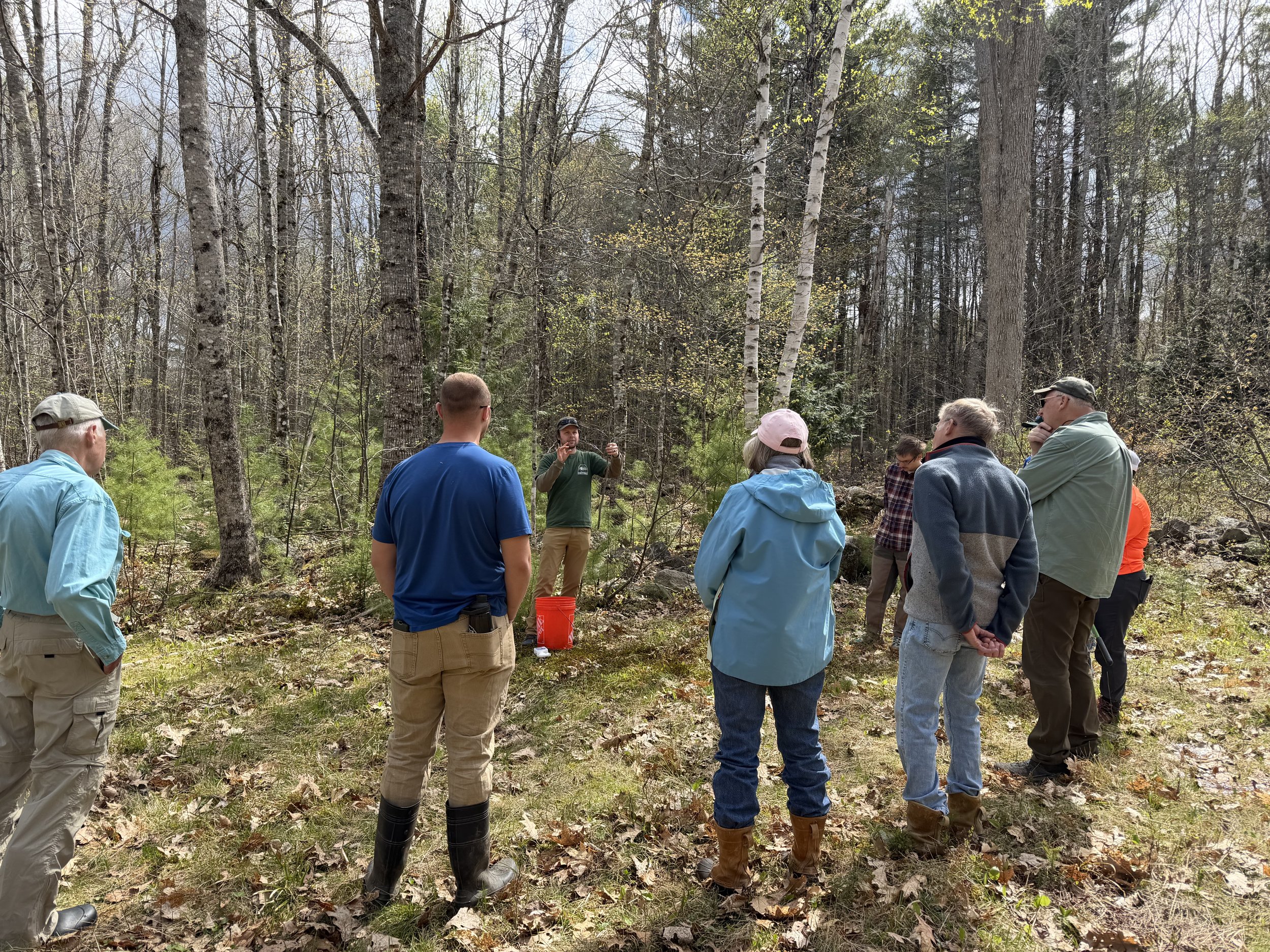
Attendees learning about live staking prior to hands-on participation
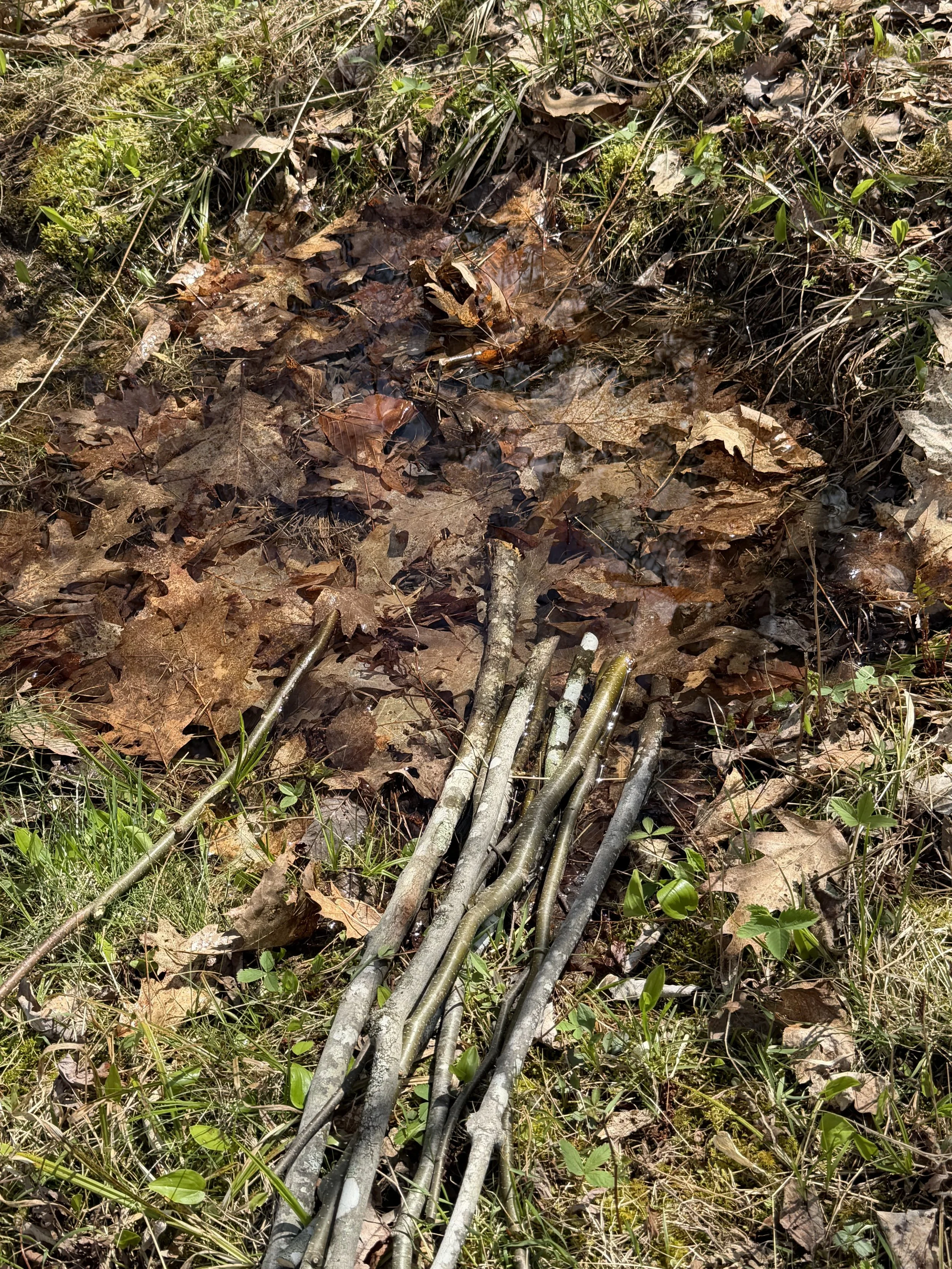
Live stakes stored in a puddle prior to installation
Participants learned key best practices for live staking to control erosion. One important takeaway was the need to keep live stakes moist prior to and following planting, even if that means temporarily storing them in standing water or a puddle.
Proper installation technique was also emphasized. At least two-thirds of each live stake should be placed below the soil surface to ensure consistent access to soil moisture for rooting. Stakes should be installed vertically, or close to 90 degrees into the ground, to increase the likelihood of survival by reaching deeper, consistently wetter soils that support root development and uptake.
A lot of factors are involved in live stake survival, including species, timing, and location. Some species are more likely to root in less-than-ideal conditions, while others prefer shade, sun, or moist soils. Knowing which species to use at a given location will increase survival rates.
Attendees were shown appropriate techniques to harvest, trim, and plant live stakes, including sanitation methods, and were then encouraged to harvest their own live stakes from living plant material at the site. Participants trimmed off excess small branches, divided live stakes when necessary, and installed them.
A drill was used to create pilot holes using a longer, older bit suitable for field use, and live stakes were tagged following installation to help identify them and prevent disturbance, since they may otherwise be mistaken for loose sticks or debris.
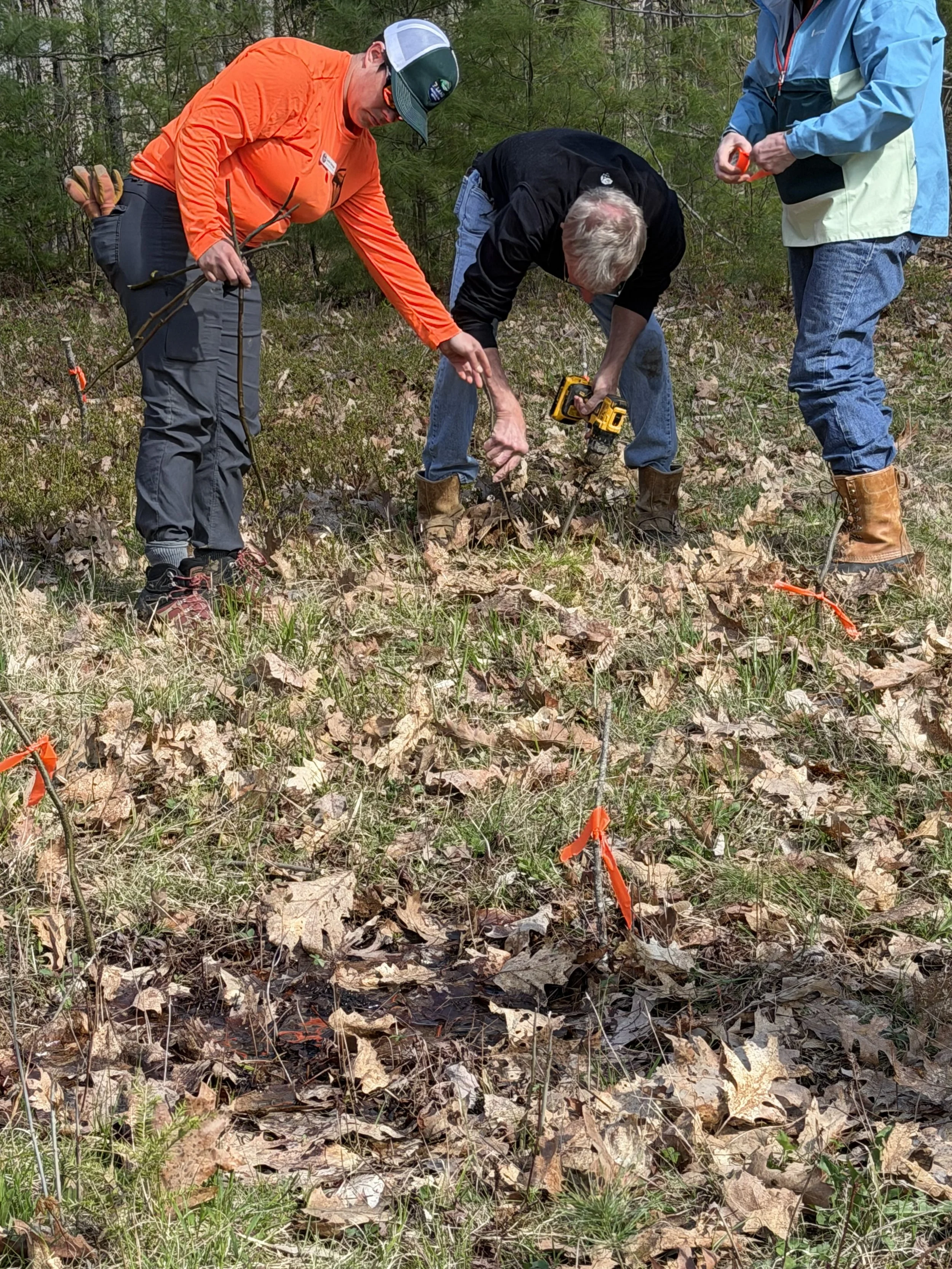
Participants installing and tagging live stakes as they go
Here are some resources mentioned during this workshop:
Woods Wise Wire is a weekly newsletter that informs subscribers about forestry-related events and news. Previous newsletters are also available on this website for review.
The slideshow Jared referenced was presented as a YouTube video and can be found here. If you would like a refresher on what we covered, please feel free to view it online.
The live staking spreadsheet can be found here.
The live staking plant guide developed by Lynn at 7 Lakes Alliance is available here. This includes species identification and information on site preferences and growing conditions.
For further documentation, additional resources from our Togus Live Stake workshop are available here.
If you were unable to attend this workshop and are still interested in learning more, it isn’t too late to attend a live staking demonstration.
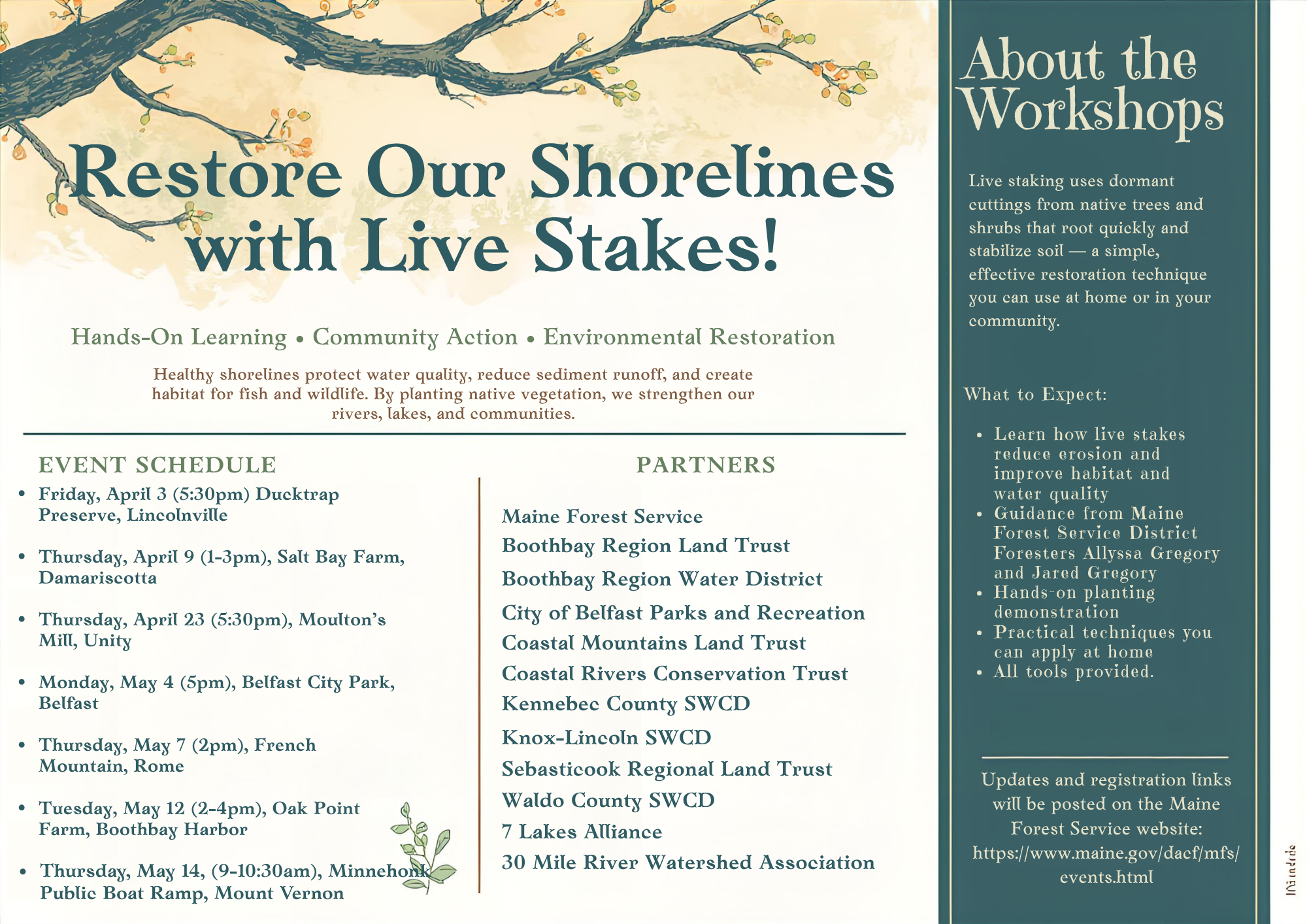
Flyer for Live Stake Workshops
The final two workshops in this series are next week. More information can be found below:
https://www.maine.gov/dacf/mfs/events.html
Also, remember that you can reach out to your district foresters if you have questions!
Thank you all for your interest in the live staking workshops. This technique is a great way to establish new plants on your property.