
Minnehonk Boat Launch Live Stake/Invasive Removal
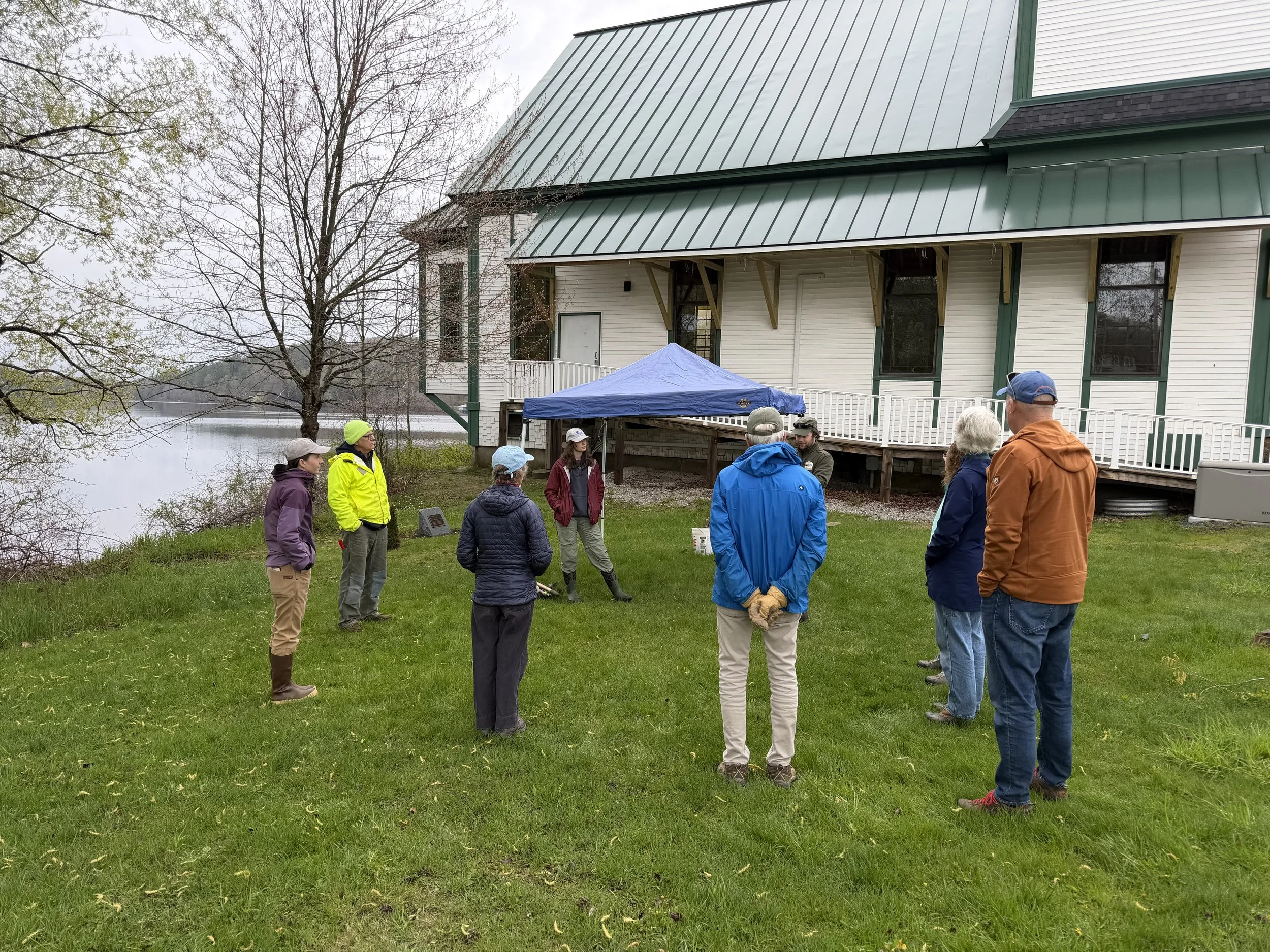
Attendees gathering for an introduction to live staking
Thanks to all who attended our final workshop in the live staking series presented by the Maine Forest Service this spring season. This workshop, led by District Forester Jared Gregory, was co-hosted by KCSWCD and 30 Mile River Watershed Association at the Minnehonk Boat Launch in Mt. Vernon.
Jared introduced participants to the concept of live staking and discussed useful tools and techniques for the process, including the importance of sterilizing tools with 70% alcohol to prevent spreading potential diseases. He also demonstrated how to safely harvest plant material for live staking applications.
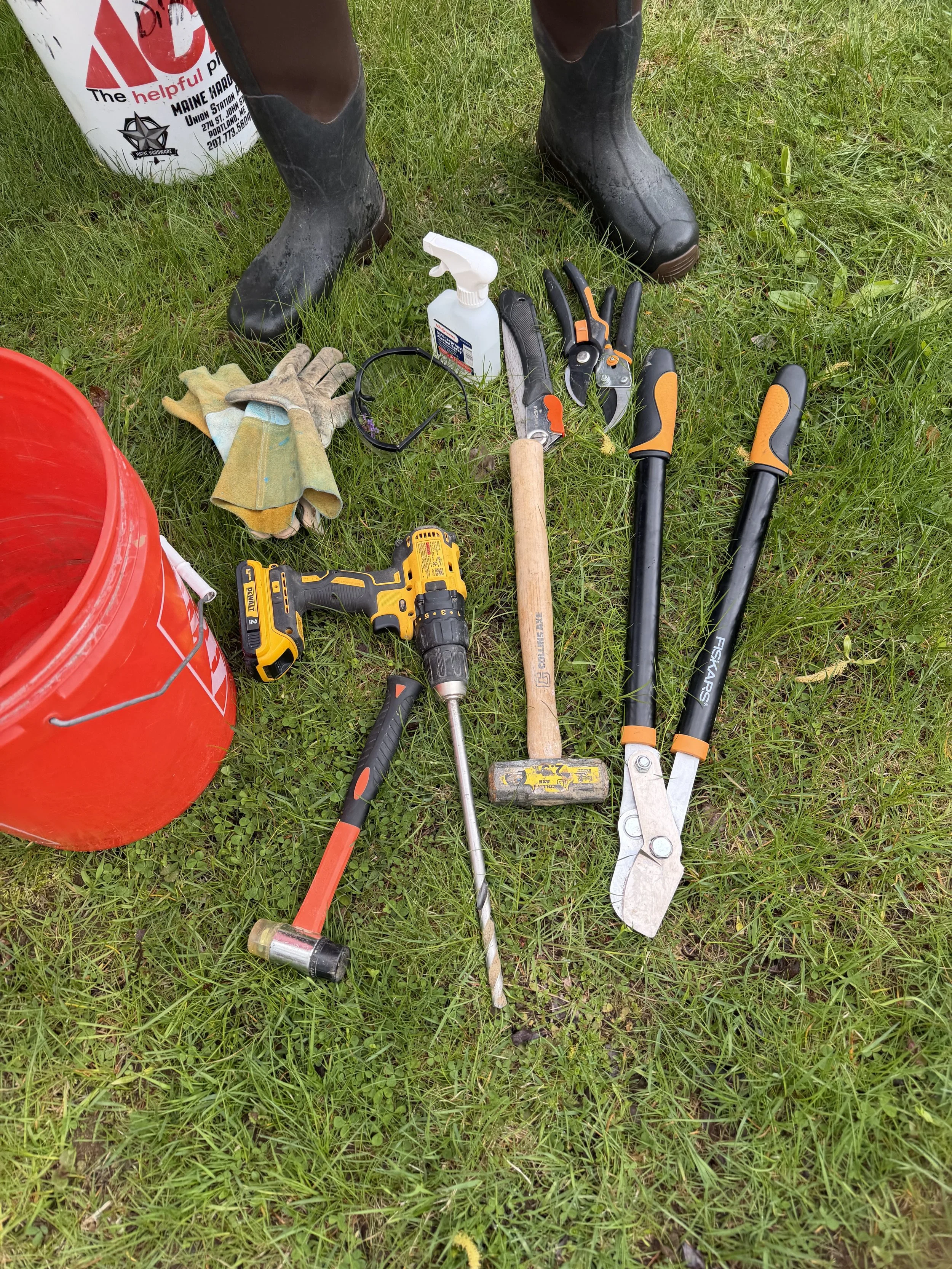
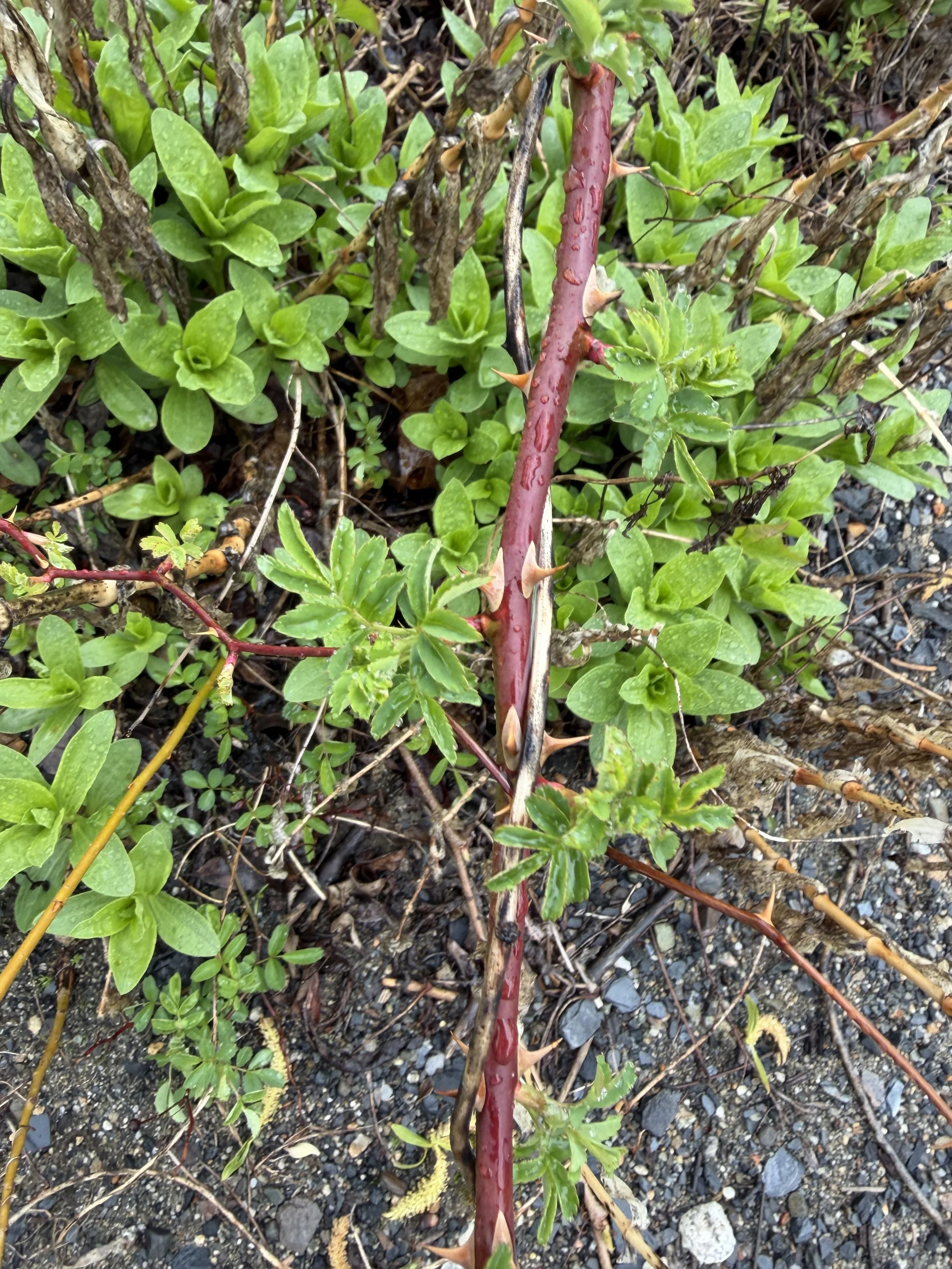
This dual-purpose workshop focused not only on live staking, but also on invasive species removal. Before beginning installation work, participants helped remove two invasive species found on site. Jared highlighted several identification features, including the hollow stem of Morrow’s honeysuckle (Lonicera morrowii) and the curved, hook-like thorns of multiflora rose (Rosa multiflora), often described as resembling a cat’s claw.
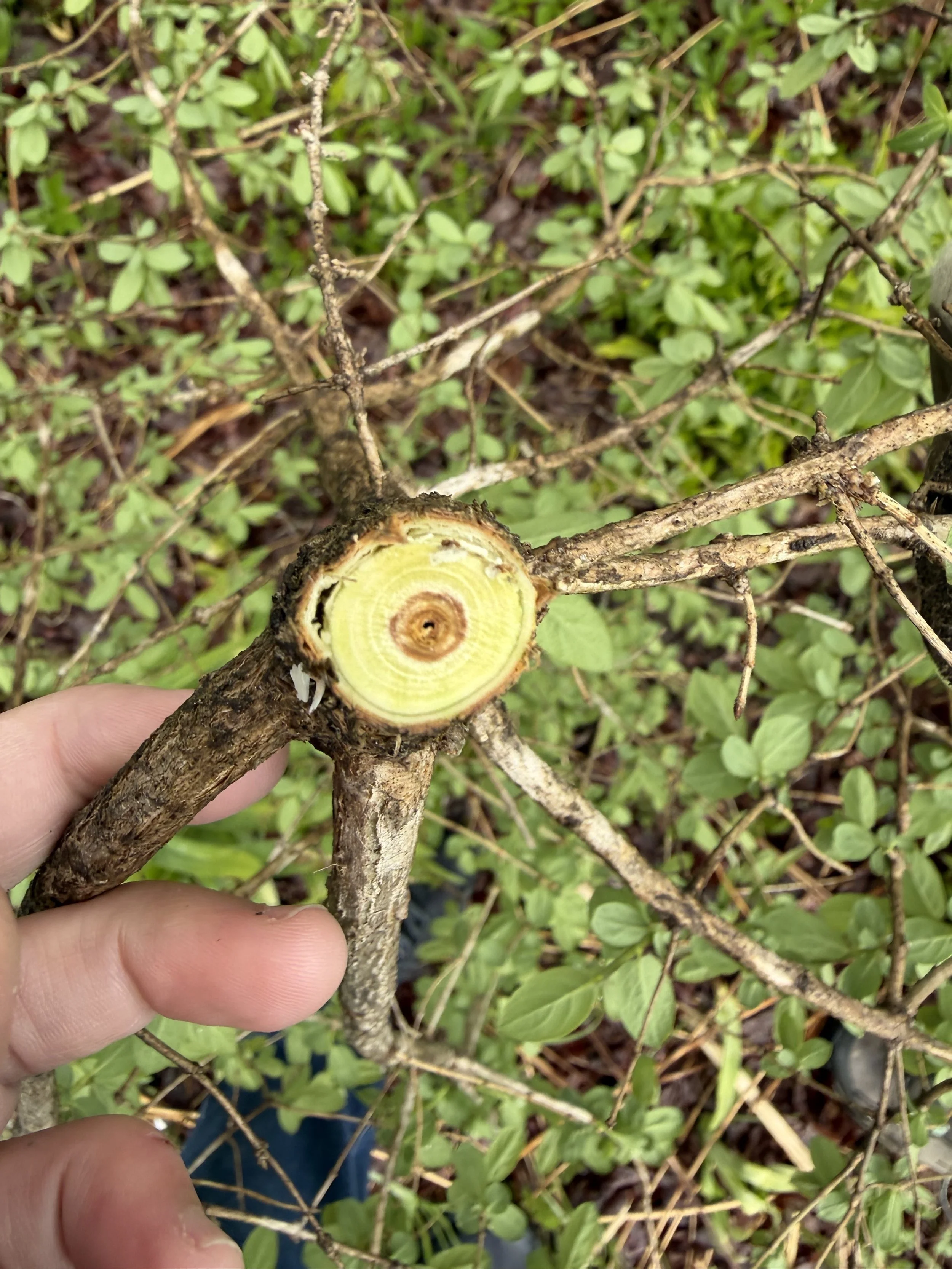
Hollow pith (stem) of Morrow’s honeysuckle
Following invasive removal efforts, Jared demonstrated how to install live stakes using a drill. Rebar and mallets were also available to create pilot holes. Participants chose to assist with invasive removal or live staking, with many assisting with both.
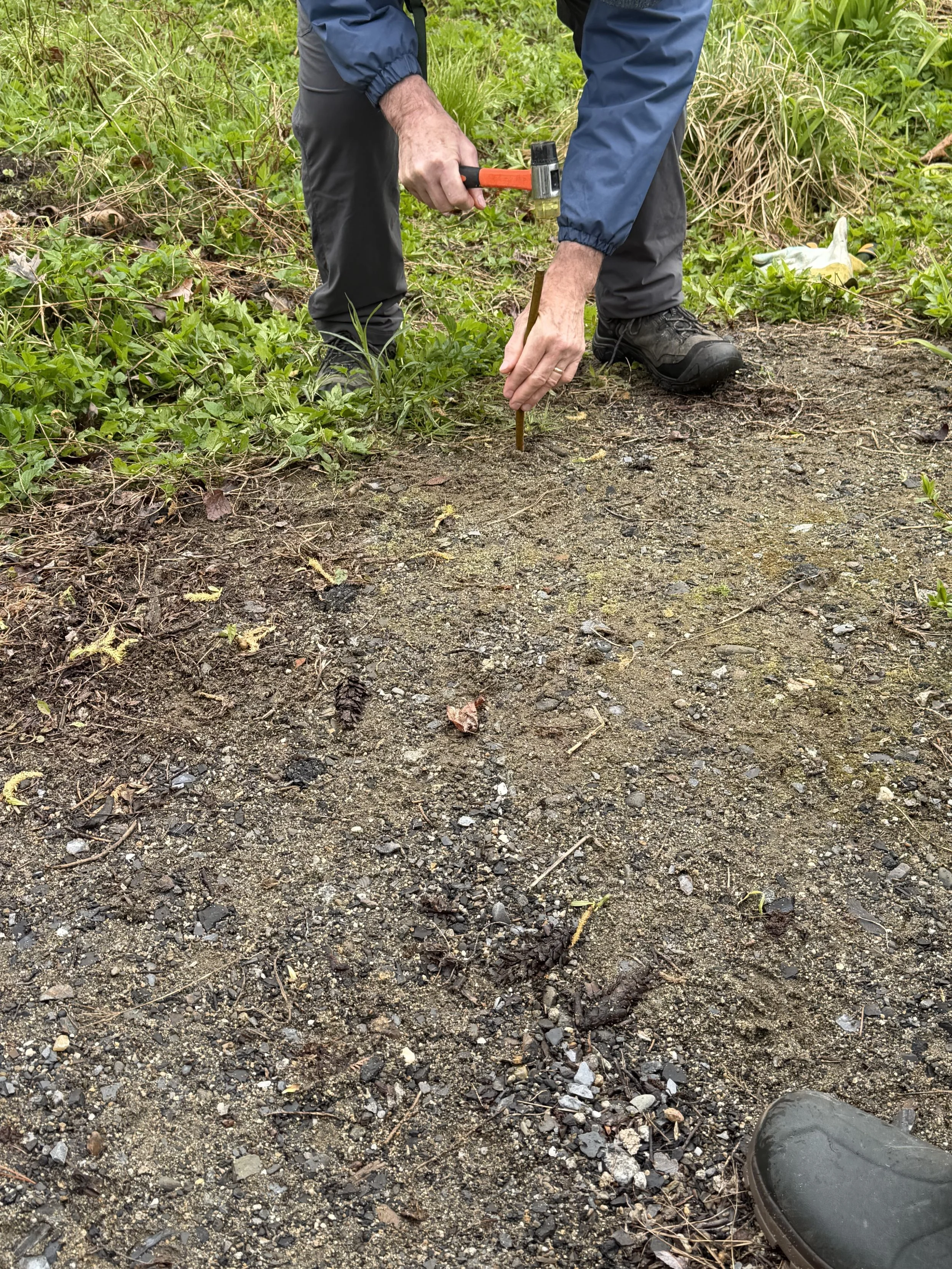
Participant tapping in a live stake
Additional Resources
Those interested in learning more about live staking may find the following resources helpful:
Woods Wise Wire is a weekly newsletter that shares forestry-related news, educational opportunities, and upcoming events from across Maine. Archived newsletters are also available for review.
The MFS live staking presentation Jared mentioned is also available online as a recorded YouTube presentation for those looking for a refresher on workshop topics and techniques.
A live staking species fact sheet, including recommended plant materials and site considerations, is also available.
A live staking plant guide developed by Lynn at 7 Lakes Alliance includes species identification information, growing conditions, and site preferences for commonly used plants.
Additional photos, workshop documentation, and related materials from our earlier Togus live staking workshop can also be viewed here. This includes the Hand Planting Memorandum, which outlines activities that may be conducted without permitting requirements.
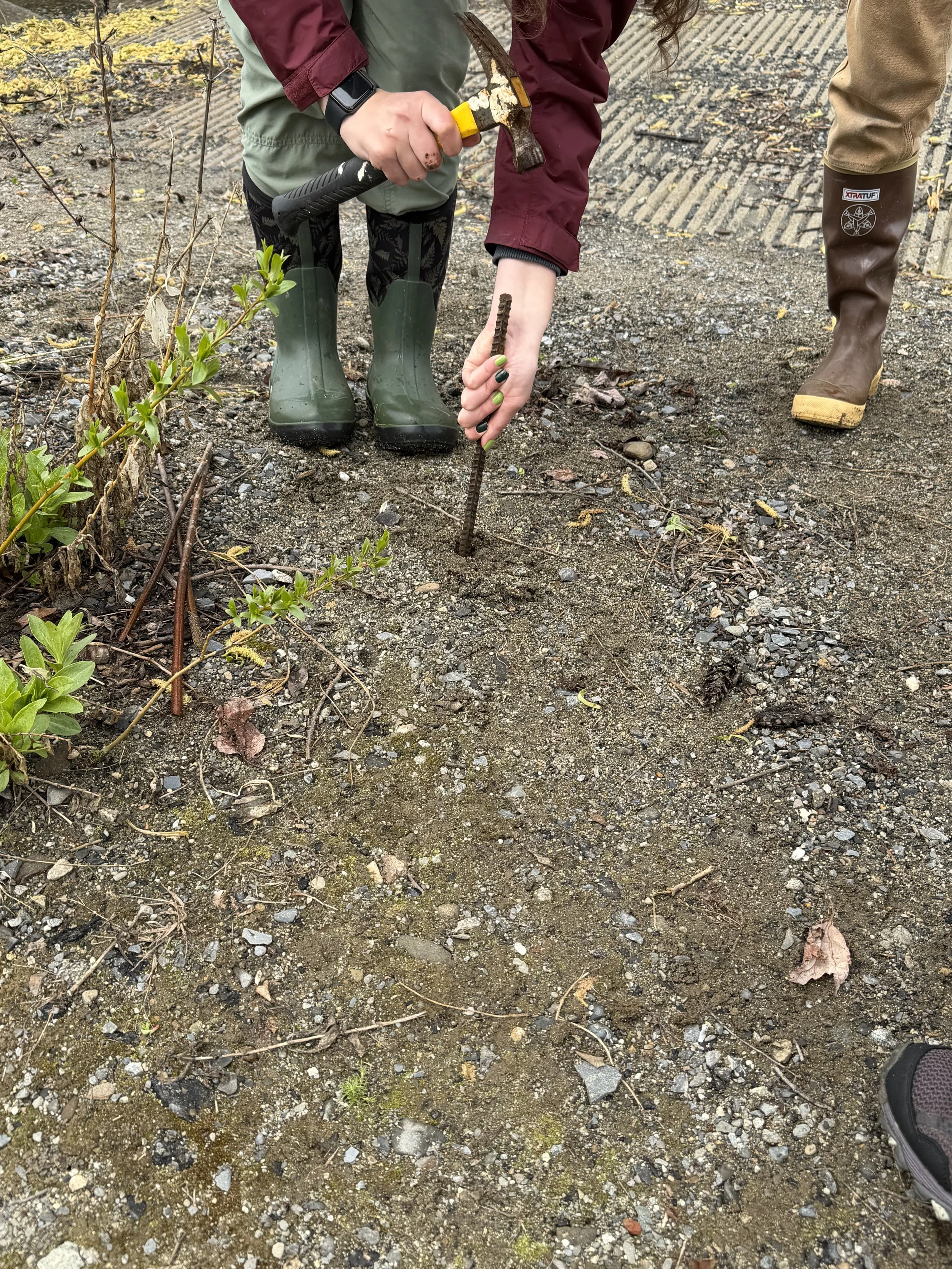
Using rebar to create a pilot hole for the live stake
If you missed this spring’s live staking workshop series, more workshops will be offered this fall. Be sure to follow KCSWCD and our partners for future announcements and upcoming opportunities.